



The true meaning of giving in ramadan: sadaqah begins with those closest to you
Ramadan reminds us that sincere giving begins with responsibility and compassion. Discover what sadaqah means, who comes first, and how to give meaningfully in Ramadan.
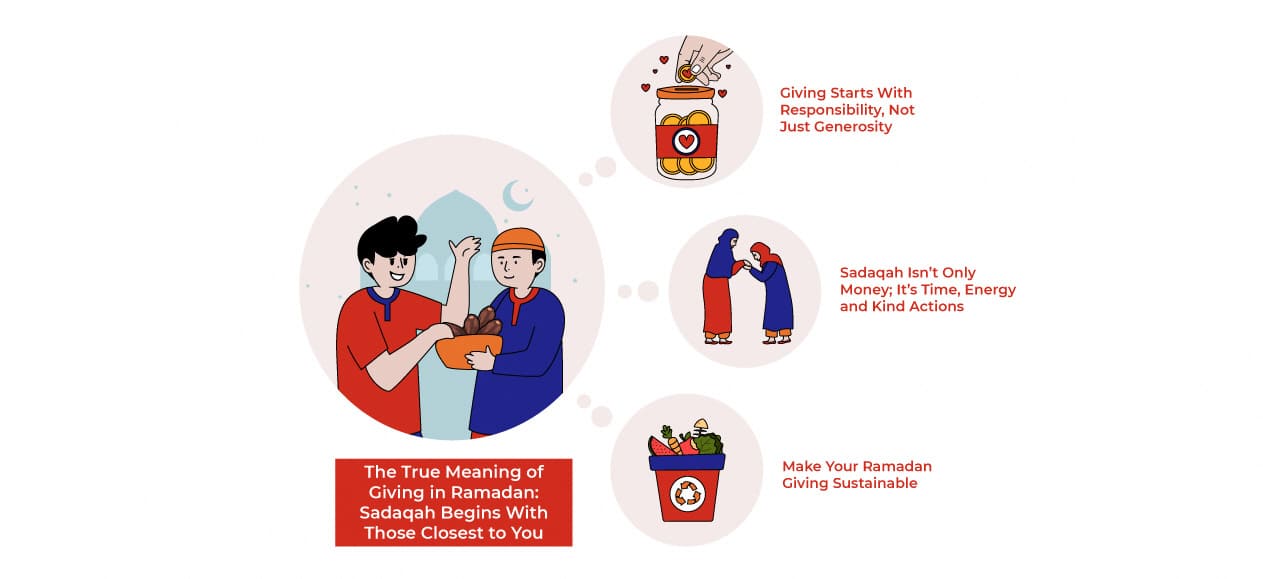
Key takeaways:
- Charity starts at home. Support your family first. When you spend on your household with sincere intention, it counts as sadaqah and should come before giving to distant causes.
- Every good deed is a form of charity. Sadaqah is not just about money. Smiling, volunteering your time, sharing your skills, or even clearing obstacles from a path are all acts of charity.
- Put your obligations before voluntary giving. Islamic law sets clear priorities: parents, relatives, orphans, and then the poor. Make sure you meet your family responsibilities before donating to others.
- Keep your giving going after Ramadan. Set up regular monthly donations and choose Sadaqah Jariyah projects that offer ongoing benefits, so you earn rewards all year.\
- Caring for the environment is also a charity. Reduce food waste, share extra meals, and choose sustainable products to make your Ramadan giving part of a bigger effort to help people and the planet.
True Ramadan charity isn't about the size of your donation; it's about consistent, intentional acts of kindness that start with those closest to you and extend sustainably throughout the year. You might assume that sadaqah in Ramadan means choosing the most distant cause or the largest charity campaign. Islamic teachings establish a different hierarchy.
The Prophet (peace be upon him) said, "Start with your own self and spend it on yourself, and if anything is left, it should be spent on your family ." This isn't about selfishness. It's about understanding that obligations come before voluntary acts.
Spending on your family becomes sadaqah when you do it to please Allah. The Prophet (peace be upon him) said, "When a Muslim spends something on his family intending to receive Allah's reward, it is regarded as Sadaqah for him". Everyday things like paying for food or education count as acts of worship if you do them with sincere intention.
Giving sadaqah starts with responsibility, not just generosity

Islamic law defines clear priorities for giving. Surah Al-Baqarah verse 215 establishes the order: parents first, then relatives, orphans, the needy, and travellers in need. Parents hold the first position because of their service and sacrifice. Supporting them is not charity; it's an obligation if your parents face financial difficulty and you have the means.
The principle is simple. Obligations take precedence over supererogatory acts. You should not donate during Ramadan to distant causes while your wife struggles to feed your children or while your elderly mother goes without necessities. The Prophet (peace be upon him) warned that neglecting one's dependents while giving to others constitutes sin. He even allowed Hind bint Utba to take from her husband's wealth what was reasonable for her and her children's needs.
Your first responsibility is ensuring those under your care have their basic needs met. Your additional giving becomes true sadaqah in Ramadan only after fulfilling these obligations.
Sadaqah isn't only money: it's time, energy, and kind actions

The Prophet (peace be upon him) said: “Whoever gives food for a fasting person to break his fast, he will have a reward like theirs, without that detracting from their reward in the slightest.”
Thinking that you can only give during Ramadan limits the true spirit of Islamic charity. The Prophet (peace be upon him) taught that charity is due on every joint of your body every day the sun rises. This means everyone should do acts of kindness daily, no matter their bank balance.
Non-monetary sadaqah in Ramadan includes things like volunteering your time or giving emotional support. The Prophet (peace be upon him) said, "Every good deed is charity. Verily, among the good deed is to meet your brother with a smiling face". Smiling at someone or removing a stone from the pavement are both acts of sadaqah.
Your skills and knowledge hold value, too. Teaching the Quran to children counts as giving during Ramadan. So does sharing professional expertise with those who need it or mentoring someone. A retired professional performs sadaqah when offering free financial advice to a struggling family. An educator gives sadaqah when tutoring students without charge.
Words carry weight in Islamic charity. Making sincere dua for others qualifies as spiritual sadaqah. So does offering encouragement when someone struggles or mediating disputes between people. The Prophet (peace be upon him) said that administering justice between two people is sadaqah and that helping someone onto their mount or loading their belongings is sadaqah.
Even your behaviour counts. Showing mercy to others and treating animals kindly are also forms of sadaqah.
This broader view is important because it makes charity open to everyone. You do not need to be wealthy to give sadaqah during Ramadan. Your time, skills, and compassion all count and bring rewards.
Make your giving during ramadan sustainable

Ramadan inspires us to be more charitable, but the Prophet (peace be upon him) was generous all year, not just during this special month. His example shows that sadaqah in Ramadan should start a habit of giving, not end it.
The most beloved deeds to Allah are consistent ones, even when small. Setting up a monthly donation establishes a steady stream of support and reinforces your commitment to social responsibility. You can establish regular contributions as little as RM5 per month and ensure continuous rewards long after Ramadan ends.
Sadaqah Jariyah offers another path to sustainable giving during Ramadan. These ongoing charity projects, like wells, schools, and orphan sponsorships, continue to benefit people. Islam promoted this concept of sustainable development over 1,400 years ago. Every person who benefits from your Sadaqah Jariyah brings you reward, even after you pass away.
Sustainability is not just about money. Islam also asks you to care for the environment (Khilafah). Being moderate helps prevent waste at Ramadan meals. Sharing extra food helps your neighbours, and buying local ingredients lowers your carbon footprint. Choosing fair trade products makes sure farmers are paid fairly.
Donate items you no longer need rather than discarding them. Your decluttered possessions serve others, and you earn a reward. These practices arrange giving during Ramadan with broader humanitarian and environmental goals.