



Mawlid al nabi: wisdom and lessons that can be taken
Explore the meaning of Mawlid al Nabi in Islam, how it is celebrated, and the lessons of compassion, mercy, and faith from the Prophet’s life. Learn more here!
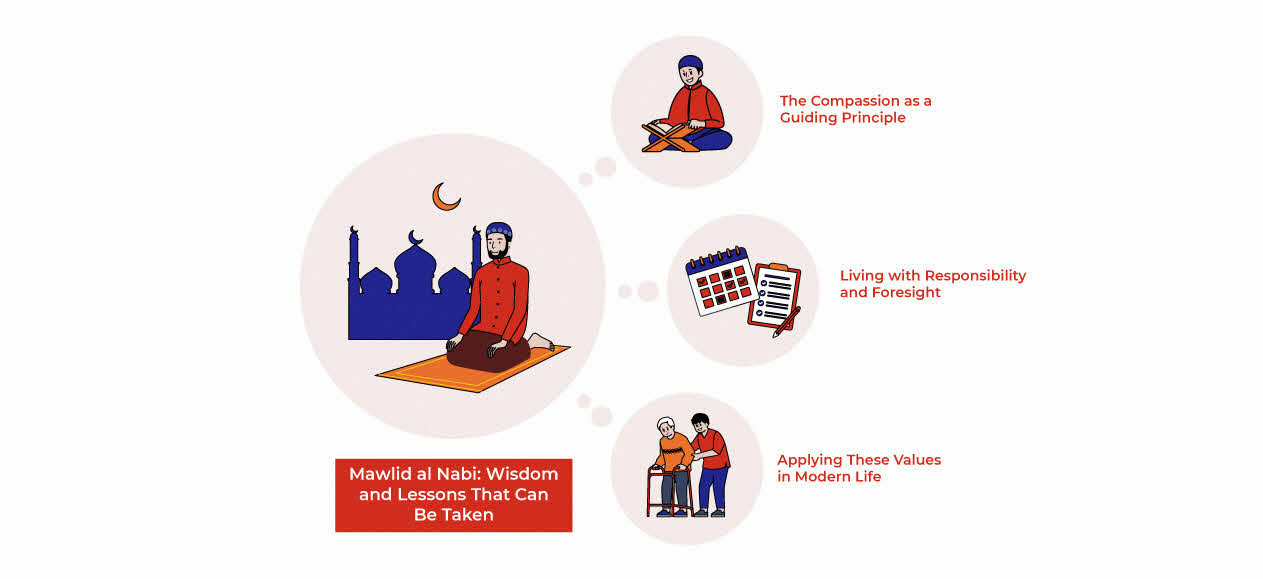
Mawlid al-Nabi is more than a celebration — it is a moment to remember the noble figure who brought mercy to the entire world. The meaning of Mawlid al-Nabi goes beyond the date of Prophet Muhammad’s (PBUH) birth; it invites us to reflect on his legacy — character, leadership, and wisdom that continue to guide the ummah today. For those wondering what Mawlid al-Nabi is or seeking the meaning in Islam, it is traditionally associated with the 12th of Rabi‘ al-Awwal — a practice that developed over Islamic history and was embraced by Muslim communities across the world.
In Malaysia, Mawlid al-Nabi is a celebration with religious gatherings, salawat or prayers (praises upon the Prophet), and processions that nurture unity. National-level events are also organised by religious authorities — signalling the importance of these values in community life.
Compassion as a guiding principle

The Prophet Muhammad (PBUH) was sent as a rahmatan lil-‘alamin — a mercy to all worlds. This value forms the foundation of how we interact — honouring family, neighbours, colleagues, and even strangers. In our fast-paced routines, it is easy to overlook the need to listen with empathy and to help without expecting anything in return. The Prophet’s example calls us to practise ihsan in the little things — prioritising courtesy in online conversations, visiting sick neighbours, or supporting local community initiatives.
The Qur’an reminds us of its meaning: “We have sent you ˹O Prophet˺ only as a mercy for the whole world” (Al-Anbiya’, 21:107). This is where the true meaning of Mawlid al-Nabi in Islam becomes tangible — mercy translated into consistent, practical kindness.
Living with responsibility and foresight

The Prophet’s life models integrity, accountability, and foresight — from caring for family welfare to safeguarding community rights. The lesson of Mawlid al-Nabi here is to nurture the discipline of making value-based decisions — whether in managing time, finances, or career. Responsible planning is not about chasing material gain alone, but about ensuring stability, peace of mind, and the continuity of good works for future generations — a lesson from Mawlid al-Nabi that is especially relevant in today’s economy.
Practical steps include journaling intentions, setting ethical guardrails (such as avoiding exploitative income), and budgeting with a clear purpose — all modern reflections of the Prophet’s Sunnah.
Bringing these values into modern life

In today’s context, we express love and responsibility through choices that protect our families while honouring our social obligations. One such step is Takaful — protection grounded in mutual assistance (ta’awun). In Malaysia, the Takaful system operates under a Shariah framework set by authoritative bodies, ensuring that industry products and practices comply with Shariah principles. Choosing Takaful is not merely about having protection — it is a commitment to mutual care in times of hardship, reflecting the spirit of brotherhood taught by the Prophet Muhammad (PBUH).
Conclusion
As we honour the Mawlid al-Nabi celebration, let us bring its lessons into every aspect of our lives — to love, to be honest, and to act responsibly, while making plans grounded in values. This is what Mawlid al-Nabi means: not merely commemorating a date, but enlivening values in our daily choices. To take it a step further, consider a Takaful plan from Great Eastern Takaful Berhad as part of a family effort rooted in foresight and compassion.
Reference:
1. https://www.britannica.com/topic/mawlid
2. https://quran.com/al-anbya/107
3. https://financialmarkets.bnm.gov.my/shariah-advisory-council-sac