



Preparing for 2026 school fees: budgeting tips for parents
Plan 2026 school fees with our smart budgeting tips now. Learn how to save for school fees and support your child’s education with long-term financial protection
Key Takeaways
- Early school fee planning helps parents avoid last-minute financial stress.
- Breaking annual costs into monthly savings makes budgeting more manageable.
- Preparing for unexpected events ensures your child’s education isn’t disrupted.
- Takaful protection can help ensure long-term educational continuity for families.
Every new school year brings a familiar financial reality — school fees, school supplies, uniforms, and countless extras that creep into a family’s budget. For many parents, the start of 2026 may feel particularly heavy as education-related costs continue to rise. But with early planning, smart budgeting, and the proper protection strategy, these expenses can be managed with confidence and clarity.
Whether you're exploring how to save for school fees or seeking better ways to plan your child’s education, the key is to start early and stay consistent.
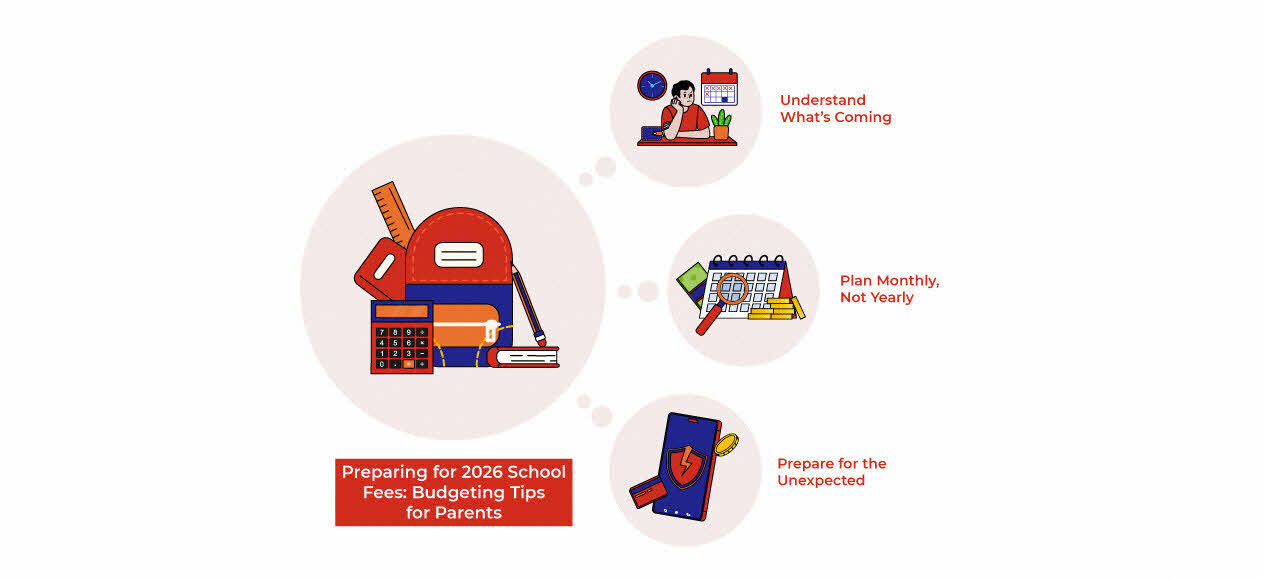
Understand what’s coming: school fee planning

Before you begin any form of school fee planning, it helps to know what you’re preparing for. Start by mapping out the complete list of education-related costs for 2026. These often include:
- School fees (tuition, development fees, lab fees, exam fees)
- Uniforms and shoes
- Textbooks and workbooks
- Stationery and digital learning tools
- School bus fees or transport costs
- Co-curricular and extracurricular activity costs
Many schools announce fee updates towards the end of the year, so keep an eye out for any announcements. You may also want to factor in inflation or average annual cost increases of around 3–5%, as reported by Malaysia’s Ministry of Education.
Creating a dedicated “School Fund” within your household budget can also help parents avoid last-minute financial strain. By allocating a fixed amount early, you will have a clearer picture of your financial position and what you need to prioritise
Saving for child’s education: plan monthly, not yearly

One of the most effective strategies for parents, especially parents struggling to pay school fees, is to break annual education expenses into manageable monthly commitments. Instead of scrambling to pay everything at once, divide the projected total into smaller monthly amounts.
Here’s how:
- Convert your annual estimate into 12 monthly savings goals.
- Automate transfers into a separate education savings account.
- Use family budgeting apps to track progress.
- Review and adjust your savings every quarter
Consistency is far more potent than intensity. Even small monthly amounts can lead to substantial year-end savings. And this approach also reduces the mental load, making budgeting feel less overwhelming
Prepare for the Unexpected

Even the most detailed savings plan can be disrupted by unexpected events, such as medical emergencies, sudden income changes, or family situations that require additional financial resources. When this happens, being financially prepared ensures that your child’s education remains uninterrupted.
Here are proactive steps you can take:
- Build an emergency buffer of at least 3–6 months’ expenses.
- Review your financial commitments and identify potential risk areas.
- Explore Takaful plans that safeguard family income , especially those designed to ensure education continuity
Some protection plans can ensure your child’s education continues even in the event of the unexpected. Real financial resilience isn’t just about covering predictable costs, it’s about being ready for life’s surprises.
Conclusion
Education remains one of the most meaningful investments any parent can make. With early school fee planning, mindful budgeting, and financial protection , you can give your child the stability they need to thrive academically in 2026 and beyond.
Now is the perfect time to start. Explore how Great Eastern Takaful can support your journey from income protection to long-term education continuity, giving you peace of mind and a stronger financial foundation for your family’s future.