



Personal financial planning: how to save for year-end goals at your pace
Learn personal financial planning strategies to save gradually, set realistic year-end goals, and achieve your financial goals confidently at your own pace.
Key Takeaways
- Saving for year-end goals works best when done gradually and realistically.
- Smaller, flexible goals are easier to sustain alongside monthly commitments.
- Consistent habits support long-term financial goal management.
- Financial protection helps keep your plans on track when the unexpected happens.
Year-end goals often come with expectations like holidays, family gatherings, celebrations, or personal milestones you have looked forward to all year. These moments are meaningful, but the financial pressure to prepare for them can feel overwhelming, especially when expenses add up unexpectedly.
Thoughtful year-end financial planning is essential. Planning ahead at your own pace lets you save steadily without added stress, making year-end goals achievable milestones instead of last-minute burdens. With the right approach, you can enjoy the season with more confidence and peace of mind.
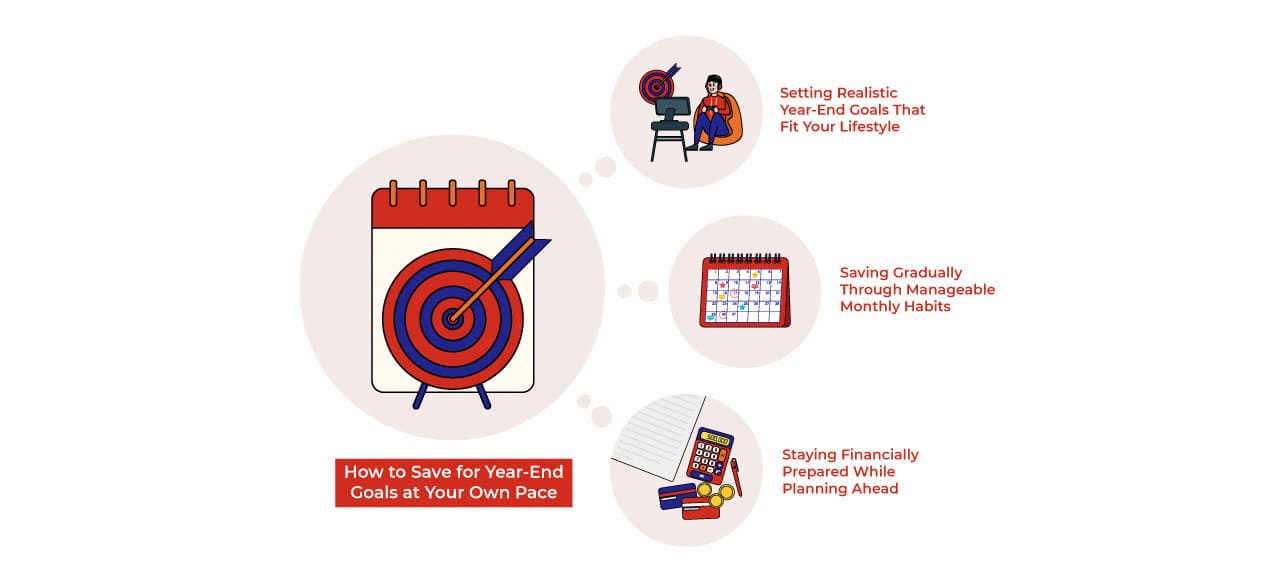
Setting realistic year-end goals that fit your lifestyle

Year-end goals are different for everyone. For some people, it might be a family holiday. For others, it could mean saving for school expenses, home improvements, or personal rewards. Setting good financial goals starts with knowing what matters most to you and matching your plans to your current finances.
Unrealistic targets can cause pressure and frustration. Achievable goals help you stay consistent and motivated. When your goals match your lifestyle and income, they inspire you instead of causing stress.
To set realistic year-end goals, consider:
- Your current monthly income and fixed commitments
- Upcoming obligations such as education, travel, or family events
- A buffer for unexpected expenses
When you plan clearly and stay flexible, end-of-year financial planning can support you instead of causing anxiety.
Saving gradually through manageable monthly habits

A good way to manage year-end goals is to break them into manageable monthly savings. Instead of trying to save a large amount at the last minute, saving gradually spreads the effort throughout the year.
This approach reduces pressure and helps you build healthy saving habits. Being consistent helps you make progress without affecting your daily needs.
Practical ways to save at your own pace include:
- Setting aside a fixed amount monthly for year-end goals
- Automating savings to ensure consistency
- Reviewing progress regularly and adjusting when needed
Saving gradually helps you manage your financial goals and reduces the need to rely on credit or emergency funds at the end of the year.
Staying financially prepared while planning ahead

Planning for year-end goals means saving and being prepared for surprises. Emergencies and unexpected expenses can disrupt even the best plans.
This is where financial protection becomes an important part of end-of-year financial planning. Having the right protection in place helps maintain stability when unexpected events arise, ensuring that your savings remain intact and your goals stay achievable.
Takaful gives you peace of mind during uncertain times. With financial protection, you can focus on your goals without always worrying.
Why saving at your own pace matters for long-term financial health
Saving aggressively might sound appealing, but it can lead to burnout or inconsistent habits. Sustainable personal financial planning focuses on balance, so you can save, spend, and protect your finances responsibly.
When you save at your own pace:
- You reduce the emotional stress associated with money.
- You maintain flexibility to adapt to life changes.
- You build long-term confidence in managing finances.
This balanced approach helps make setting financial goals a positive and empowering experience, not a restrictive one.
Plan Ahead with Confidence
Year-end planning does not have to be overwhelming. With realistic goals, monthly habits, and the right financial protection, you can prepare confidently at your own pace. Explore Great Eastern Takaful’s protection solutions and talk to a Takaful Advisor to support your year-end financial planning with peace of mind.